Can Pressure Washing Remove Algae?
Featured Answer: Can Pressure Washing Remove Algae?
Yes, pressure washing can remove algae from many durable exterior surfaces, including concrete, driveways, walkways, patios, and certain masonry surfaces. However, pressure alone is not appropriate for every material. At Stanley Window Care, we match the cleaning method to the surface and the severity of the organic growth. Durable hardscapes may be pressure washed, while more delicate exterior materials may require lower-pressure cleaning or soft washing to remove algae without subjecting the surface to unnecessary force.
Algae can turn an otherwise clean exterior into a stained, neglected-looking surface. Green, dark, or discolored patches may develop on concrete, walkways, walls, shaded areas, and other surfaces where moisture lingers.
At Stanley Window Care, we provide professional exterior cleaning services throughout our South Orange County service area. As a family-owned company serving homeowners since 1997, we understand that effective algae removal is not simply about using the highest possible water pressure. The correct approach depends on what is being cleaned.
What Does Algae Look Like on Exterior Surfaces?
Exterior algae can appear as green, dark green, brownish, or black-looking discoloration, depending on the surface and environmental conditions.
Homeowners commonly notice it in areas that stay damp longer than surrounding surfaces.
Typical locations include:
- Concrete walkways
- Driveways
- Patios
- Shaded exterior walls
- Areas near landscaping
- Pool surroundings
- Retaining walls
- Masonry
- Areas beneath trees
- North-facing or heavily shaded sections of a property
The discoloration may initially look like ordinary dirt. Over time, however, the affected area can become more noticeable as organic growth spreads across the surface.
How Does Pressure Washing Remove Algae?
Pressure washing uses controlled water pressure to loosen and remove surface contamination from durable exterior materials.
On an appropriate surface, professional pressure washing can remove algae, dirt, mud, grime, and other accumulated debris, revealing a much cleaner surface underneath.
The key word is appropriate.
More pressure does not automatically produce a better result. Excessive pressure can potentially damage certain materials, while insufficient cleaning may leave contamination behind.
Professional exterior cleaning requires selecting the appropriate technique based on the material, condition, and type of buildup.
What Surfaces Can Be Pressure Washed for Algae Removal?
Pressure washing is commonly suitable for durable hard surfaces that can tolerate controlled water pressure.
Concrete Driveways
Concrete driveways can gradually develop dark or green areas where moisture and organic material accumulate.
Professional pressure washing can remove surface algae along with much of the ordinary dirt and grime that makes concrete look darker over time.
Cleaning the entire affected section also helps produce a more uniform appearance than attempting to spot-clean isolated patches.
Concrete Walkways
Walkways frequently develop organic growth around landscaping, irrigation systems, and shaded areas.
Because these surfaces are walked on regularly, keeping them clean is important not only for appearance but also because wet algae-covered surfaces may become slippery.
Patios
Patios can collect dirt, organic debris, and algae, particularly in areas beneath furniture, plants, patio covers, trees, or other sources of shade.
Professional cleaning can refresh these outdoor living areas and make the surrounding property look better maintained.
Certain Masonry Surfaces
Some masonry and hardscape surfaces can be professionally pressure washed, although the cleaning method should always account for the material’s age and condition.
A professional evaluation is particularly important when surfaces are weathered, cracked, painted, coated, or otherwise more vulnerable.
Should Algae Be Pressure Washed Off Stucco?
Stucco requires more caution than concrete.
While concrete can often tolerate controlled pressure washing, stucco should not automatically be treated with the same pressure and technique.
Excessive force can potentially damage the finish, drive water where it does not belong, or create visible marks.
When algae or organic staining appears on more delicate exterior surfaces, a lower-pressure approach may be preferable.
Stanley Window Care provides exterior house washing and evaluates the surface before determining the appropriate cleaning method.
The objective is to remove contamination while protecting the material underneath.
Pressure Washing vs. Soft Washing for Algae
One of the most important distinctions in exterior cleaning is the difference between pressure washing and soft washing.
Pressure washing relies more heavily on the mechanical force of water. It is commonly used on durable surfaces such as concrete.
Soft washing uses substantially lower pressure and an appropriate cleaning process to address organic buildup on surfaces where high pressure may be unsuitable.
The correct method depends on the surface.
At Stanley Window Care, we do not believe every exterior area should be cleaned the same way. A driveway, roof, exterior wall, window, and solar panel each have different characteristics.
Professional cleaning means choosing the appropriate process rather than treating the entire property with one piece of equipment at one pressure setting.
Can Pressure Washing Remove Green Algae From Concrete?
Yes. Green algae can often be removed effectively from concrete using professional pressure washing.
Concrete is one of the most common areas where homeowners notice green organic growth.
Shaded portions of a driveway or walkway may remain damp longer after rain, irrigation, or morning moisture. These conditions can encourage visible buildup.
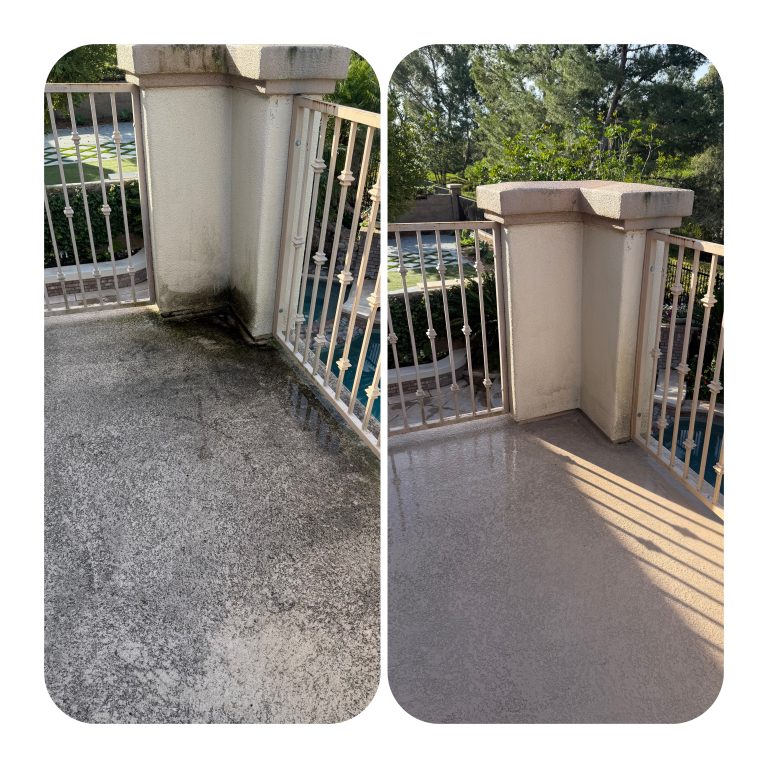
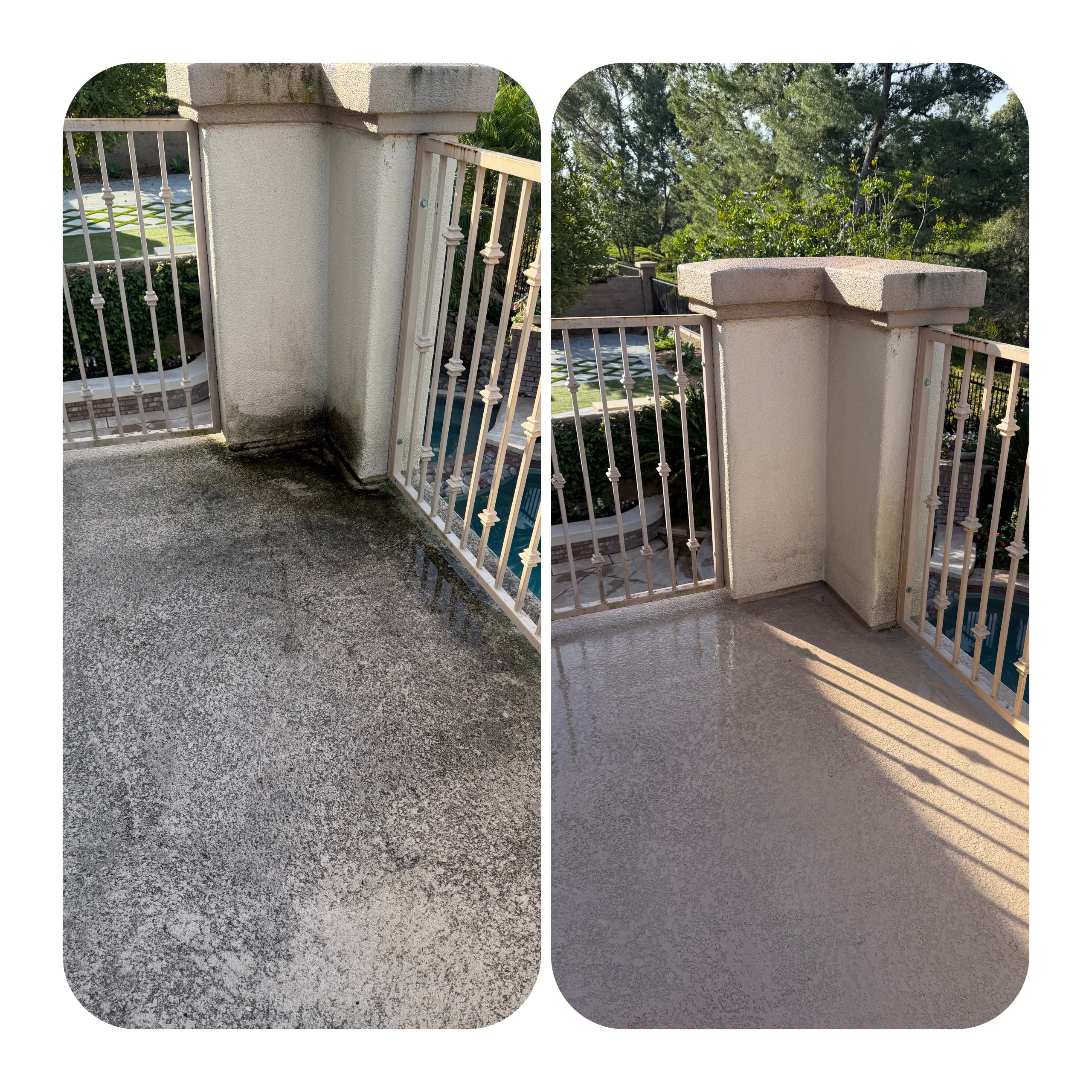
When the concrete is professionally cleaned, both the algae and surrounding dirt can be removed, dramatically improving the appearance of the surface.
Can Pressure Washing Remove Black Algae?
Dark discoloration requires a closer look because not every black stain is the same substance.
Some dark exterior staining may be related to algae or other organic growth, while other discoloration can come from oil, tire marks, rust, minerals, irrigation water, dirt, or other contaminants.
This distinction matters because different stains require different treatment methods.
Pressure washing may remove or significantly improve certain dark organic stains, but homeowners should not assume that every black mark will respond identically.
Professional evaluation helps determine the likely source of the staining and the most appropriate cleaning method.
Can Algae Make Concrete Slippery?
Algae and similar organic buildup can contribute to a slick surface, particularly when wet.
This can be especially noticeable on walkways, patios, steps, pool areas, and other pedestrian surfaces.
A surface that feels normal when dry may become considerably more slippery after irrigation or rain.
Removing organic buildup can therefore improve both the appearance of the area and the cleanliness of frequently used walking surfaces.
Why Does Algae Keep Coming Back After Pressure Washing?
Pressure washing removes existing surface contamination, but it cannot permanently change the environmental conditions around a property.
If an area continually receives moisture and limited sunlight, algae may eventually return.
Common contributing conditions include:
- Frequent irrigation
- Sprinkler overspray
- Persistent shade
- Poor drainage
- Dense landscaping
- Moisture retention
- Organic debris
- Trees blocking sunlight
If algae repeatedly appears in the same location, homeowners may want to look beyond cleaning and identify the moisture source.
For example, adjusting a sprinkler that constantly wets a walkway may help reduce how quickly organic growth returns.
How Long Does Pressure Washing Keep Algae Away?
There is no exact timeline because regrowth depends on the environment.
A sunny concrete driveway that dries quickly may remain clean considerably longer than a shaded walkway that receives sprinkler overspray every morning.
Weather, landscaping, drainage, humidity, shade, and irrigation can all affect how quickly algae returns.
Professional cleaning removes the existing buildup. Keeping surrounding conditions as dry and clean as reasonably possible can help extend the appearance of the freshly cleaned surface.
Will Pressure Washing Alone Kill Algae?
Mechanical removal and treatment of organic growth are not always the same thing.
Pressure can physically remove visible buildup from a durable surface, but some cleaning situations benefit from a process specifically designed to address organic contamination.
This is one reason professional cleaners may use different methods depending on the surface and severity of the problem.
Rather than simply applying maximum pressure, we consider what is growing on the surface, what material is underneath it, and what cleaning approach is appropriate for that material.
Why More Pressure Is Not Always Better
A common misconception about pressure washing is that difficult stains simply require more pressure.
That approach can cause problems.
Excessive pressure may etch concrete, damage coatings, affect painted surfaces, harm wood, or damage softer exterior materials.
Even durable surfaces should be cleaned using controlled techniques.
At Stanley Window Care, our goal is to achieve a strong cleaning result without using more force than the surface requires.
That distinction becomes particularly important when cleaning residential properties containing several different materials in close proximity.
Can You Pressure Wash Algae From a Roof?
Roofs should not be treated like driveways.
High-pressure washing can be inappropriate for many roofing materials and may create unnecessary risk of damage.
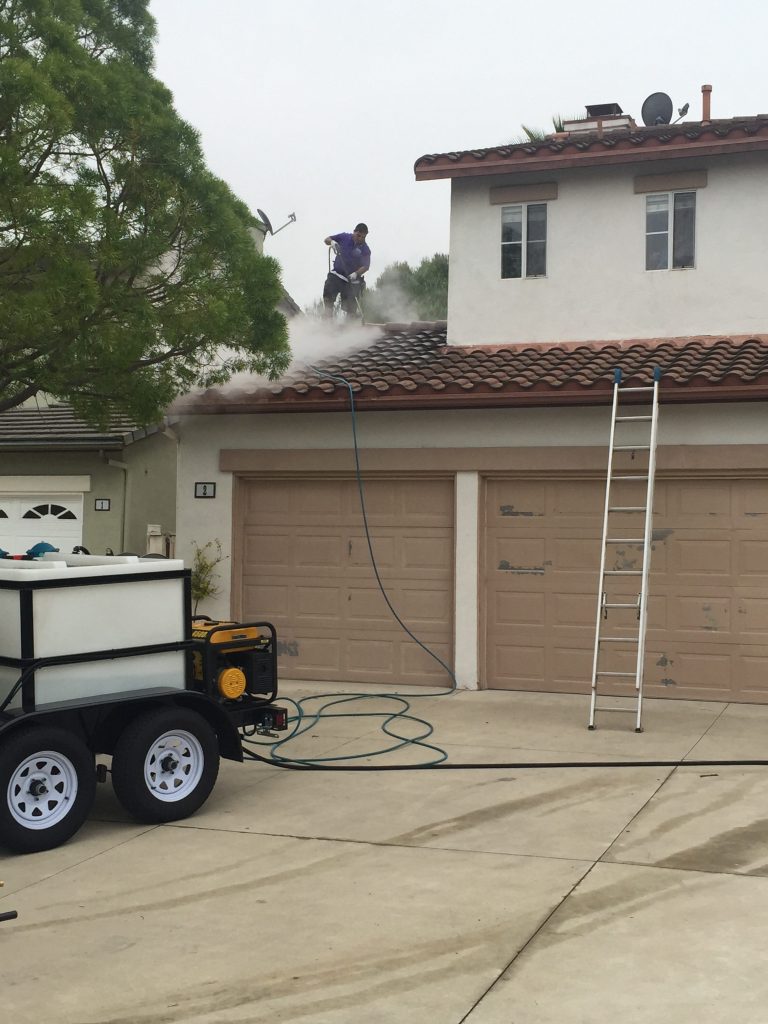
Stanley Window Care offers roof soft washing, which uses a different approach from traditional high-pressure cleaning.
When dealing with organic buildup on a roof, the cleaning process should be selected specifically for the roofing material and condition.
The same principle applies throughout exterior cleaning: use the right method for the surface.
Can Pressure Washing Remove Algae From Pavers?
Many paver surfaces can be professionally cleaned, but the specific condition of the installation should be considered first.
Pavers may contain joint material, coatings, sealers, or other features that influence the cleaning approach.
Aggressive pressure in the wrong location can disturb joint sand or affect certain finishes.
For this reason, pavers should be evaluated before cleaning rather than automatically treated like standard concrete.
Professional Algae Removal Improves Curb Appeal
Algae can create dramatic visual differences across an exterior surface.
A clean section of concrete may appear significantly lighter than an adjacent area covered with organic growth and dirt.
This contrast becomes especially noticeable around:
Front entrances, driveways, walkways, patios, outdoor entertaining areas, retaining walls, and other prominent hardscapes.
Professional pressure washing can restore a cleaner and more consistent appearance across these areas.
For homeowners preparing to sell a property, host an event, or simply improve curb appeal, exterior cleaning can make a substantial visual difference without replacing the underlying surface.
Pressure Washing Before Selling a Home
First impressions matter when preparing a property for real estate photography, showings, and open houses.
A driveway covered with dark organic staining can make an otherwise well-maintained home appear less cared for.
Professional pressure washing can help refresh visible hardscapes before a home goes on the market.
We can also combine pressure washing with services such as professional window cleaning and exterior house washing to improve multiple visible areas of the property.
Pressure Washing and Exterior House Washing
Some homes have algae in more than one location.
The driveway may have green buildup along shaded edges while the exterior walls show discoloration around landscaping or areas that remain damp.
Instead of applying the same pressure everywhere, we can use different exterior cleaning techniques based on each surface.
Durable hardscapes may receive pressure washing, while more delicate exterior materials may require lower-pressure cleaning.
This surface-specific approach allows us to address the property more comprehensively.
How Often Should You Pressure Wash Algae-Prone Areas?
There is no universal cleaning schedule.
Some homeowners may only need professional pressure washing periodically, while properties with significant shade, landscaping, irrigation, or moisture may need service more frequently.
Rather than cleaning according to an arbitrary calendar, we recommend paying attention to the condition of the surface.
Visible signs that cleaning may be needed include:
- Green discoloration
- Dark organic buildup
- Slippery areas when wet
- Heavy dirt accumulation
- Uneven concrete color
- Algae returning along shaded edges
Addressing buildup before it becomes extensive can help keep exterior areas looking consistently maintained.
Why Choose Stanley Window Care for Pressure Washing?
Stanley Window Care has served homeowners since 1997, and we have worked with more than 100,000 homeowners over the years.
As a family-owned company, we understand that customers expect professional service, dependable communication, and careful treatment of their property.
Our exterior cleaning services include:
- Pressure washing
- Exterior house washing
- Roof soft washing
- Residential window cleaning
- Commercial window cleaning
- Solar panel cleaning
- Awning cleaning
- Chandelier cleaning
- Glass restoration
- Construction cleanup
- HOA and condominium services
Our experience allows us to evaluate the material being cleaned rather than simply assuming every exterior stain should be blasted away with high pressure.
Professional Pressure Washing in South Orange County
Stanley Window Care serves homeowners throughout our South Orange County service area, including communities such as Dana Point, Laguna Beach, Laguna Niguel, Mission Viejo, Newport Beach, Newport Coast, Corona del Mar, San Clemente, Ladera Ranch, Coto de Caza, Costa Mesa, and surrounding areas we serve.
Local properties experience different levels of dust, shade, landscaping exposure, irrigation, and coastal influence.
Our familiarity with Orange County homes helps us determine an appropriate exterior cleaning approach based on the property and surface condition.
Frequently Asked Questions About Pressure Washing Algae
Can Pressure Washing Completely Remove Algae?
Pressure washing can effectively remove visible algae from many durable surfaces, particularly concrete driveways, patios, and walkways. Results depend on the surface, severity of the growth, and cleaning method.
Is Pressure Washing Safe for Every Surface?
No. High-pressure cleaning is not appropriate for every exterior material. Delicate surfaces may require soft washing or another lower-pressure cleaning technique.
Can I Pressure Wash Algae Off My House?
The appropriate method depends on the home’s exterior material. High pressure should not automatically be used on siding, stucco, painted surfaces, or other potentially vulnerable materials.
Does Rain Remove Algae From Concrete?
Rain may rinse away loose dirt, but established algae can remain attached to the surface. Persistent organic buildup generally requires more thorough cleaning.
Will Algae Return After Pressure Washing?
It can. Pressure washing removes existing buildup, but algae may return if the area remains consistently damp, shaded, or exposed to irrigation and organic debris.
Should I Pressure Wash Algae From My Roof?
High-pressure washing is generally not the preferred approach for many roofing materials. Roof soft washing is a more appropriate service for many roof-cleaning situations.
Schedule Professional Algae Removal and Pressure Washing
Yes, pressure washing can remove algae, particularly from durable exterior surfaces such as concrete driveways, walkways, patios, and certain hardscapes. The most important part of the process is choosing a cleaning method appropriate for the material.
At Stanley Window Care, we bring decades of professional exterior cleaning experience to every property.
Since 1997, we have helped homeowners maintain cleaner windows, concrete, exterior surfaces, roofs, solar panels, and other areas around their properties.
If algae is making your driveway, walkway, patio, or exterior surfaces look dirty and neglected, contact Stanley Window Care to schedule professional pressure washing or exterior cleaning in South Orange County.