Can Pressure Washing Remove Rust Stains?
Featured Answer: Can Pressure Washing Remove Rust Stains?
Yes, pressure washing can help remove rust stains, but pressure alone is often not enough to completely eliminate them. Rust is a chemical stain caused by iron oxidation, and once it penetrates porous materials such as concrete, pavers, stucco, or masonry, specialized rust-removal treatments may be needed in combination with professional pressure washing. At Stanley Window Care, we evaluate the surface, severity of the staining, and source of the rust before choosing the safest cleaning method. Proper treatment can dramatically improve or completely remove many rust stains without relying on excessive pressure that could damage the underlying surface.
How Pressure Washing Removes Rust Stains
Rust stains are different from ordinary dirt, dust, algae, and surface grime. Dirt generally sits on top of a surface and can often be loosened and washed away with water pressure. Rust can chemically bond with or penetrate the material underneath it, particularly when the affected surface is porous.
This is why simply pointing a pressure washer at a rust stain does not always produce the desired result.
Professional rust stain removal typically involves a combination of surface evaluation, appropriate cleaning solutions, controlled dwell time, agitation when necessary, and pressure washing or rinsing. The objective is to break down the discoloration and flush the residue away while protecting the original surface.
At Stanley Window Care, we believe the correct cleaning method is more important than simply increasing pressure. Excessive pressure can create permanent marks while leaving portions of the original rust stain behind.
Why Rust Stains Can Be Difficult to Pressure Wash
Rust develops when iron or iron-containing materials react with oxygen and moisture. The resulting iron oxide produces the familiar orange, reddish-brown, or dark brown discoloration commonly found around homes and commercial properties.
Because this discoloration can migrate into tiny pores within concrete, stone, masonry, and similar surfaces, a standard pressure washing treatment may remove surface contamination while leaving a noticeable orange shadow behind.
The age of the stain also matters. Fresh rust staining is generally easier to address than rust that has remained on a porous surface for months or years.
Repeated exposure can make matters worse. A leaking irrigation system, rusty patio furniture, corroding metal fixture, fertilizer containing iron, or constantly dripping piece of equipment can continue depositing iron onto the same area.
For the best long-term result, we recommend identifying the source of the staining in addition to cleaning the affected surface.
Can Pressure Washing Remove Rust Stains From Concrete?
Concrete is one of the most common surfaces where we encounter rust discoloration.
Rust stains may develop on concrete from:
- Metal patio furniture
- Irrigation and sprinkler systems
- Fertilizers containing iron
- Rusting tools or equipment
- Metal planters and decorative items
- Corroding gates and railings
- Air-conditioning equipment
- Drainage from metal components
- Vehicles and machinery
- Construction materials left on concrete
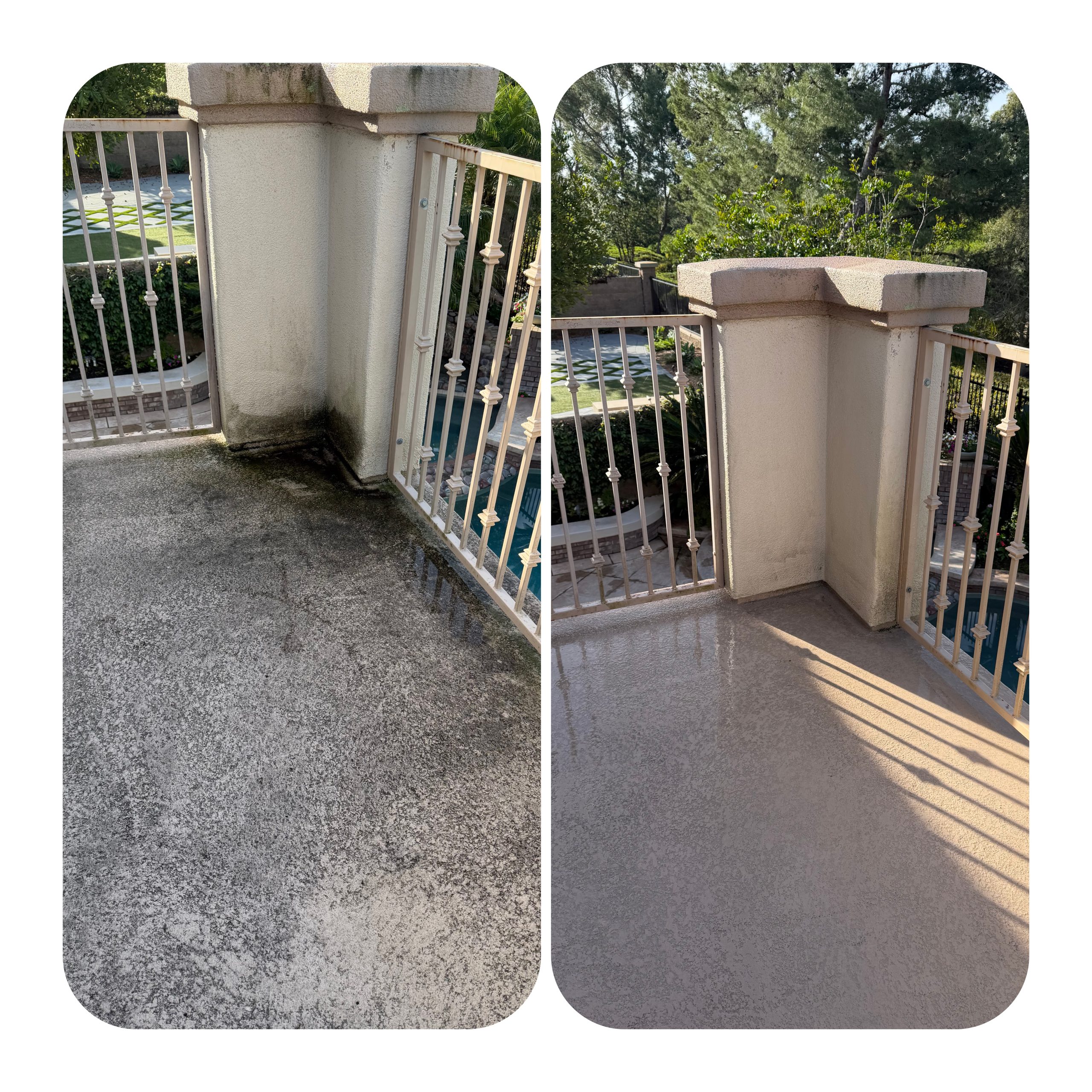
Pressure washing can remove surrounding dirt and some superficial rust contamination, but established rust staining often requires additional treatment.
Concrete is porous. Water containing dissolved iron can enter its pores and leave mineral deposits behind. Once oxidation occurs, the orange discoloration can remain even after the surface has been pressure washed.
A professional cleaning approach targets the rust itself instead of attempting to blast it away with unnecessarily high pressure.
Why Higher Pressure Is Not Always Better for Rust Removal
One of the biggest misconceptions about pressure washing is that stubborn stains simply require more pressure.
That approach can create unnecessary damage.
Using excessive pressure on concrete can remove or scar the upper cement paste, creating visible lines, streaks, or uneven areas. Aggressive pressure can also expose aggregate and leave a permanently altered appearance.
Other materials can be even more vulnerable.
Stucco can become etched or damaged. Painted surfaces may peel. Wood fibers can splinter. Certain natural stones can be permanently marked. Pavers may lose joint material, while older masonry can deteriorate under aggressive cleaning.
For this reason, professional rust removal should focus on chemistry, technique, and controlled pressure rather than maximum pressure.
At Stanley Window Care, our goal is to clean the stain while preserving the surface underneath it.
Can Pressure Washing Remove Sprinkler Rust Stains?
Sprinkler systems are a frequent source of orange and brown staining on exterior surfaces.
Irrigation water containing iron can repeatedly spray onto:
- Driveways
- Sidewalks
- Exterior walls
- Stucco
- Curbs
- Pavers
- Fences
- Hardscape
- Concrete patios
As the water evaporates, iron deposits remain. Repeated watering creates increasingly noticeable orange discoloration.
Pressure washing may improve the appearance, but sprinkler rust stains frequently require a dedicated rust-removal process because the iron has chemically stained the surface.
It is also important to correct the source whenever possible. Adjusting sprinkler heads so they no longer spray walls, concrete, or other hardscape can help prevent the rust staining from quickly returning.
Can Rust Stains Be Removed From Driveways?
Many driveway rust stains can be significantly improved or removed with professional treatment.
The final result depends on several factors, including the type of driveway material, age of the stain, source of the iron, depth of penetration, previous cleaning attempts, and overall condition of the surface.
A driveway may also contain multiple types of staining simultaneously. Rust may appear alongside oil, tire marks, dirt, organic growth, irrigation deposits, and general traffic contamination.
This is another reason a complete driveway cleaning can produce a much better overall appearance than treating only one small discolored area.
Professional pressure washing can clean the surrounding concrete while targeted stain treatment addresses the rust.
Can Pressure Washing Remove Rust From Pavers?
Rust stains can also develop on brick and concrete pavers.
Common causes include metal furniture, grills, planters, landscape decorations, irrigation water, fertilizer, and metal equipment.
Pavers require careful treatment because aggressive pressure can disturb joint sand or alter the appearance of the surface. Certain colored or sealed pavers may also react differently to cleaning products.
We recommend evaluating the material before applying any aggressive stain-removal treatment.
The objective is not simply to make the rust disappear. We want to remove or reduce the staining without creating a cleaner-looking spot that is noticeably different from the surrounding pavers.
In some situations, cleaning the surrounding area helps produce a more consistent finished appearance.
Can Pressure Washing Remove Rust Stains From Stucco?
Stucco requires considerably more caution than concrete.
Rust staining can develop below metal fixtures, vents, fasteners, railings, roof components, decorative features, and irrigation spray areas.
Because stucco can be damaged by excessive pressure, simply increasing water pressure is not an appropriate solution.
The rust should be treated using a method compatible with the stucco finish, followed by careful rinsing. Painted stucco requires additional consideration because the cleaning process must account for both the stain and the coating underneath it.
When rust is caused by a corroding metal component attached to the building, that source should also be repaired or replaced. Otherwise, the stain may return after cleaning.
What Types of Rust Stains Can Professional Exterior Cleaning Address?
We encounter rust staining from many different sources throughout residential and commercial properties.
Some of the most common include sprinkler stains, fertilizer stains, patio furniture marks, metal planter stains, railing runoff, equipment stains, irrigation deposits, corroding fixtures, and construction-related metal contamination.
Understanding the source can help determine the best treatment.
For example, a small rust ring underneath a patio chair is very different from years of irrigation overspray covering a large exterior wall. Both may technically be rust stains, but they should not necessarily receive identical treatment.
Does Pressure Washing Remove Fertilizer Rust Stains?
Fertilizer can create surprisingly severe rust staining.
Many fertilizers contain iron because it helps promote healthy green plant growth. When fertilizer granules land on wet concrete or become wet after application, the iron can oxidize and produce small orange or brown spots.
These stains can become extremely noticeable across driveways, sidewalks, patios, and pool decks.
Standard pressure washing may remove loose fertilizer residue but leave the oxidation behind. Targeted rust treatment may therefore be necessary.
After applying fertilizer, homeowners should sweep or blow excess granules off surrounding hardscape before watering. This simple precaution can prevent extensive staining.
Can Old Rust Stains Be Removed With Pressure Washing?
Older rust stains can often be improved, although complete removal cannot be guaranteed in every situation.
The longer rust remains on a porous surface, the greater the possibility that discoloration has penetrated below the immediate surface.
Previous attempts at cleaning can also influence the outcome. Harsh chemicals, aggressive scrubbing, or excessive pressure may alter the surface and complicate later restoration.
We recommend addressing rust staining as soon as practical instead of allowing it to remain through repeated cycles of moisture, drying, and oxidation.
Professional Rust Removal vs. DIY Pressure Washing
Consumer pressure washers can be useful for basic exterior maintenance, but rust removal requires more than water pressure.
A homeowner may repeatedly clean the same stain without realizing that the discoloration requires chemical treatment rather than additional pressure.
Continuing to increase pressure can eventually damage the surface.
Professional cleaning allows us to consider several variables before beginning treatment, including:
- Surface material
- Surface condition
- Stain severity
- Stain age
- Probable source
- Porosity
- Existing coatings or sealers
- Surrounding landscaping
- Appropriate pressure level
- Appropriate cleaning treatment
This approach reduces unnecessary trial and error.
Will Rust Stains Come Back After Pressure Washing?
Rust stains can return if the original source remains.
For example, cleaning irrigation staining from a wall will improve its appearance, but if the same sprinkler continues spraying iron-containing water onto the wall every morning, new staining can develop.
Likewise, a rusting metal chair can recreate the same orange rings on a patio after it is returned to the cleaned surface.
Preventive measures may include adjusting irrigation, replacing corroding metal components, using protective furniture feet, removing fertilizer from hardscape, improving drainage, and preventing metal objects from sitting on wet surfaces for extended periods.
Cleaning addresses the existing stain. Prevention addresses the reason it appeared.
Can Pressure Washing Damage Concrete While Removing Rust?
Yes. Incorrect pressure washing techniques can damage concrete.
Pressure washer damage often appears as etched lines, streaks, swirls, exposed aggregate, or noticeably lighter areas. Once concrete has been physically etched, additional cleaning cannot simply restore the removed material.
This is particularly important when treating a small rust stain.
Attempting to aggressively blast one small area can create a permanent light spot or pressure mark that becomes more noticeable than the original stain.
A controlled cleaning process provides a much safer approach.
How We Approach Rust Stain Removal at Stanley Window Care
At Stanley Window Care, we approach exterior cleaning with the understanding that different stains require different solutions.
We first consider the affected material and likely source of the discoloration. We then determine an appropriate cleaning method based on the condition of the surface.
Where rust requires targeted treatment, the goal is to loosen or dissolve the iron-based discoloration before thoroughly rinsing the area.
Pressure is used as a cleaning tool—not as a substitute for proper stain treatment.
This distinction is especially important when working around valuable residential surfaces where unnecessary damage can be expensive to repair.
Pressure Washing and Exterior Cleaning in Orange County
Orange County properties are exposed to a wide range of conditions that can create exterior staining, including irrigation systems, hard water, landscaping products, coastal conditions, metal fixtures, and everyday outdoor use.
Driveways, patios, walkways, exterior walls, and other hardscape can gradually accumulate multiple forms of discoloration.
At Stanley Window Care, we provide professional exterior cleaning services designed to restore these areas while using cleaning methods appropriate for the surface.
Our services can help address accumulated dirt, organic buildup, surface contamination, and many types of stubborn exterior stains.
Rust Stain Removal for Residential Properties
Rust stains can significantly affect the appearance of an otherwise well-maintained home.
A clean driveway with several orange fertilizer spots can still look neglected. A freshly maintained patio can be distracted by rings underneath furniture. Irrigation staining can create orange streaks across walls and walkways.
Targeted stain treatment can make a substantial difference in the overall appearance of these areas.
Combining rust treatment with broader exterior cleaning can also help create a more uniform appearance by removing surrounding dirt and discoloration at the same time.
Rust Stain Removal for Commercial Properties
Commercial properties can experience many of the same rust problems as residential properties, often on a larger scale.
Irrigation systems can stain sidewalks and exterior walls. Metal equipment can leave marks on concrete. Landscape maintenance can introduce iron-containing fertilizer onto walkways. Outdoor furniture and fixtures can create repeated staining.
Because sidewalks, entrances, and exterior surfaces contribute to the appearance of a business, keeping these areas clean is an important part of property maintenance.
Professional exterior cleaning can help maintain a cleaner, more consistent appearance across high-visibility areas.
Frequently Asked Questions About Pressure Washing Rust Stains
Will a pressure washer completely remove rust from concrete?
Sometimes, but pressure alone may not completely remove established rust stains. Targeted rust treatment combined with professional pressure washing or rinsing generally provides a better approach.
Should I use maximum pressure on a stubborn rust stain?
No. Excessive pressure can damage concrete, stucco, pavers, masonry, wood, and painted surfaces. A stubborn stain often requires a different treatment rather than additional pressure.
Can sprinkler rust stains be removed?
Many irrigation-related rust stains can be significantly improved or removed. The source should also be addressed to reduce the likelihood of the staining returning.
Can fertilizer stains be pressure washed away?
Pressure washing may remove loose residue, but iron oxidation from fertilizer may require targeted treatment.
Can pressure washing remove rust rings from patio furniture?
Many furniture-related rust stains can be treated successfully, particularly when addressed early. Results depend on the surface and how deeply the rust has penetrated.
Will pressure washing prevent rust stains from returning?
No. Pressure washing removes existing contamination but does not eliminate the source of rust. Corroding metal, irrigation overspray, fertilizer, or other sources should be corrected whenever possible.
Is rust removal safe for concrete?
Professional rust removal can be performed using methods designed for concrete. However, excessive pressure or inappropriate chemicals can damage or discolor the surface.
How to Prevent Rust Stains After Exterior Cleaning
Once rust staining has been removed, several simple practices can help keep exterior surfaces looking cleaner.
Move metal furniture periodically and inspect the feet for corrosion. Keep fertilizer granules off concrete and pavers. Adjust sprinklers that continuously hit hardscape or exterior walls. Inspect metal fixtures for corrosion. Avoid leaving tools, metal containers, and equipment on wet concrete.
Small preventive steps can save homeowners from dealing with much larger stains later.
Professional Pressure Washing by Stanley Window Care
When rust appears on a driveway, walkway, patio, pavers, or another exterior surface, more pressure is not necessarily the answer.
The best results come from understanding the stain, selecting an appropriate treatment, and using controlled cleaning techniques that protect the underlying material.
At Stanley Window Care, we bring decades of exterior cleaning experience to homes throughout Orange County. Since 1997, we have helped homeowners maintain cleaner windows, hardscape, and exterior surfaces with professional cleaning services focused on careful workmanship and dependable results.
Whether the problem involves rust staining, irrigation marks, dirty concrete, accumulated exterior grime, or a combination of several issues, we can evaluate the surface and determine the most appropriate cleaning approach.
The Bottom Line: Can Pressure Washing Remove Rust Stains?
Yes, pressure washing can help remove rust stains, but the best results frequently require specialized rust treatment combined with professional cleaning. Because rust can penetrate porous materials, simply increasing water pressure may leave discoloration behind and can potentially damage the surface.
For concrete, driveways, patios, walkways, pavers, and other exterior surfaces, the safest approach is to treat the rust appropriately, use controlled pressure, thoroughly rinse the surface, and correct the source of the staining whenever possible.
With the right process, many unsightly orange and brown rust stains can be dramatically reduced or completely removed, restoring a cleaner and more attractive appearance to the property.