Does Dirty Buildup Reduce Solar Panel Efficiency?
Featured Answer: Does Dirt Reduce Solar Panel Efficiency?
Yes. Dirty buildup can reduce solar panel efficiency by blocking sunlight from reaching the photovoltaic cells that generate electricity. Dust, pollen, bird droppings, mineral deposits, pollution, leaves, and other debris can accumulate on the glass surface of solar panels and reduce the amount of usable sunlight reaching the cells below.
At Stanley Window Care, we provide professional solar panel cleaning for homeowners throughout South Orange County. Since solar panels are installed to capture as much sunlight as possible, keeping their surfaces clean can help maintain consistent energy production and protect the value of the solar investment.
How Dirty Solar Panels Lose Efficiency
Solar panels generate electricity when sunlight reaches photovoltaic cells and produces an electrical current. The glass covering the cells is designed to allow sunlight to pass through while protecting the components underneath.
When a layer of dirt develops on that glass, some sunlight is absorbed, scattered, or blocked before it can reach the photovoltaic cells.
Even when panels do not look extremely dirty from the ground, their surfaces may contain a combination of:
- Dust and fine airborne particles
- Pollen
- Bird droppings
- Tree sap and organic residue
- Leaves and plant debris
- Vehicle and roadway pollution
- Construction dust
- Mineral deposits from water
- Coastal residue and airborne contaminants
As these materials accumulate, they can interfere with the amount of sunlight reaching the solar cells.
How Much Can Dirty Solar Panels Affect Energy Production?
There is no single percentage that applies to every solar system. The amount of energy lost because of dirty solar panels depends on the amount and type of buildup, panel angle, weather conditions, surrounding environment, rainfall, season, and length of time since the panels were cleaned.
A lightly dusty panel may experience a relatively small difference, while heavily soiled panels can experience a more noticeable decline.
The distribution of the dirt also matters.
A thin, relatively even coating of dust affects a panel differently than concentrated bird droppings or leaves covering individual areas. Localized debris can create shaded portions of the panel even when most of the glass appears relatively clean.
For homeowners, the important point is that solar panels perform best when sunlight has a clear path to the photovoltaic surface.
Why Solar Panels Get Dirty in Orange County
Southern California’s abundant sunshine makes solar energy attractive, but the same dry climate can allow dust to remain on panels for extended periods.
In South Orange County, solar panels may be exposed to dirt from landscaping, road traffic, nearby construction, wind, trees, birds, and long stretches without meaningful rainfall.
Homes in communities such as Mission Viejo, Laguna Niguel, Dana Point, San Clemente, Ladera Ranch, Coto de Caza, Newport Coast, and surrounding areas can experience different types of solar panel buildup depending on their immediate environment.
Properties closer to busy roads may collect more airborne particles. Homes surrounded by mature landscaping can encounter pollen, leaves, sap, and bird activity. Coastal properties may face additional airborne residue.
This is why solar panel cleaning needs can vary considerably from one property to another.
Does Rain Clean Solar Panels?
Rain can rinse away some loose surface dust, but rain should not be considered a complete substitute for professional solar panel cleaning.
Anyone who has looked at a car after a light Southern California rain has seen the problem. Once the water dries, the surface may still have spots, streaks, and dirt.
Solar panels can behave similarly.
Rain may remove loose particles while leaving behind:
- Dried water spots
- Mineral residue
- Stubborn dust
- Bird droppings
- Pollen
- Organic material
- Dirt concentrated around panel edges
If dirt has adhered to the surface, rainfall alone may not remove it.
Long dry periods can make the issue more noticeable because airborne material has additional time to accumulate between significant storms.
Bird Droppings Can Be Especially Problematic
Bird droppings deserve particular attention because they create concentrated areas of obstruction rather than a uniform layer of dust.
A panel can appear mostly clean while still having several sections covered by bird droppings. Those opaque deposits prevent sunlight from reaching the covered area until the material is removed.
Homes near trees, roof ridges, utility lines, or common bird-perching areas can be especially susceptible.
Bird droppings can also become increasingly difficult to remove after repeated exposure to heat and sunlight. Professional cleaning allows these stubborn deposits to be addressed without homeowners having to climb onto the roof and attempt to scrub the panels themselves.
Dust and Pollen Can Create a Film Across Solar Panels
Dust is one of the most common causes of solar panel soiling.
Individual particles may seem insignificant, but thousands of particles can gradually create a visible haze over the glass. Pollen and other fine airborne materials can contribute to the same effect.
The problem may become more apparent during extended periods of dry weather.
Wind can deposit dust onto a roof, while the panel’s surface provides an area where particles can settle. If the home is near an unpaved area, construction project, heavily traveled road, or dusty landscaping, buildup may occur more quickly.
Regular inspection can help homeowners determine whether their panels are developing a noticeable film.
Water Spots and Mineral Deposits on Solar Panels
Water itself can contribute to panel residue when it contains dissolved minerals.
When water evaporates, minerals may remain on the glass and form visible spots or deposits. Repeated wetting and drying can make this residue increasingly noticeable.
This is one reason proper solar panel cleaning methods are important. Simply spraying panels with water does not necessarily leave them clean.
The objective is not only to wet the panels but to remove contaminants without leaving unnecessary residue behind.
Can Dirty Solar Panels Increase Electricity Costs?
If dirty panels generate less electricity than they otherwise would under the same conditions, a household may need to obtain more electricity from the utility.
The financial impact depends on the solar system, electricity usage, utility rate structure, battery configuration, season, and severity of the panel contamination.
A homeowner should not automatically assume every change in an electric bill is caused by dirty panels. Energy production naturally changes with daylight hours, cloud cover, weather, household consumption, equipment condition, and other variables.
However, heavily contaminated solar panels are one potential source of reduced solar production that should not be overlooked.
Signs Your Solar Panels May Need Cleaning
Solar panels are often difficult to inspect closely from ground level, particularly on two-story homes or steep roofs. Still, several signs can indicate that cleaning may be appropriate.
These include visible dust, bird droppings, leaves, streaking, water spots, or a generally dull appearance across the panel surfaces.
Homeowners who monitor solar production may also notice that output appears lower than expected compared with similar weather conditions and seasons.
Production data should be interpreted carefully because numerous factors can influence output. If the panels are visibly dirty, however, cleaning is a practical maintenance step before assuming that the solar equipment itself has developed a problem.
How Often Should Solar Panels Be Professionally Cleaned?
There is no universal schedule that works for every Orange County property.
Some solar systems may remain relatively clean for long periods, while others accumulate dirt rapidly because of their surroundings.
Cleaning frequency can be influenced by:
- Nearby trees
- Bird activity
- Road traffic
- Construction
- Dusty landscaping
- Panel angle
- Coastal exposure
- Rainfall patterns
- Seasonal pollen
- Surrounding vegetation
For many homeowners, the best approach is to periodically inspect the condition of the panels and schedule cleaning when meaningful buildup becomes visible.
Properties with persistent bird activity or unusually dusty surroundings may benefit from more frequent service.
Why Professional Solar Panel Cleaning Is Safer Than DIY Roof Cleaning
Solar panels may look simple to clean, but accessing them can be the most dangerous part of the job.
Residential solar arrays are commonly installed on sloped roofs, where homeowners may encounter slick roofing materials, difficult access points, fragile roof components, and fall hazards.
There is also the solar equipment itself to consider.
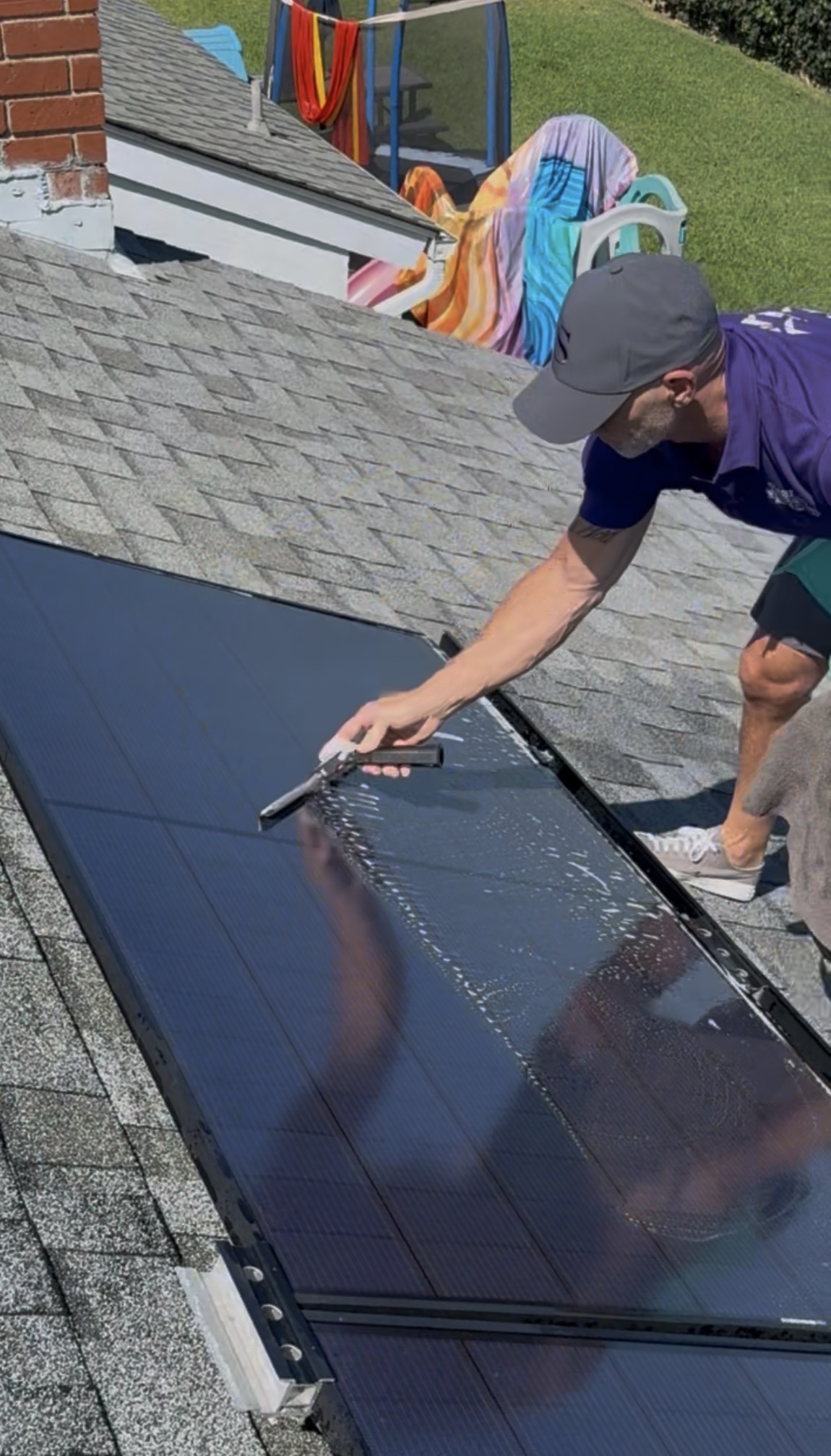
Panels should be treated carefully to avoid unnecessary scratching or damage. Aggressive scrubbing, harsh chemicals, abrasive materials, and inappropriate tools are generally poor choices for delicate glass surfaces.
At Stanley Window Care, we approach solar panel cleaning as a professional exterior cleaning service rather than treating the panels like ordinary outdoor glass.
Why You Should Avoid Abrasive Solar Panel Cleaning Methods
Solar panel glass is exposed to years of sunlight, weather, and environmental contamination. Cleaning should remove buildup without creating unnecessary wear.
Homeowners should avoid abrasive pads, harsh scraping, and aggressive cleaning techniques that could potentially damage panel surfaces or surrounding components.
Using inappropriate chemicals can also create residue rather than solving the problem.
A properly cleaned solar panel should have a clear surface that allows sunlight to reach the cells without unnecessary obstruction.
Does Cleaning Solar Panels Make Them More Efficient?
Cleaning does not increase a solar panel’s rated efficiency beyond its design capabilities. Instead, cleaning removes contaminants that may prevent the panel from operating as effectively as it can under current conditions.
That distinction is important.
Solar panel cleaning cannot repair defective equipment, replace a failing inverter, correct wiring problems, or change the amount of available sunlight. What it can do is remove a physical layer of contamination between the sun and the photovoltaic cells.
For dirty panels, restoring a clean surface can help the system capture available sunlight more effectively.
Solar Panel Cleaning as Preventive Home Maintenance
Solar panels represent a significant investment, and cleaning can be incorporated into a home’s regular exterior maintenance.
The roof, windows, siding, gutters, and solar panels are all exposed to the same outdoor environment. Dust, pollen, bird activity, weather, and airborne contaminants do not affect only one exterior surface.
Periodically checking the solar panels gives homeowners an opportunity to identify excessive buildup before it becomes severe.
This is particularly useful in Southern California, where long periods of dry weather can allow dirt to remain on exterior surfaces for months.
Professional Solar Panel Cleaning in South Orange County
At Stanley Window Care, we have served homeowners since 1997, providing professional exterior cleaning services with an emphasis on careful workmanship and dependable service.
Our solar panel cleaning service is designed for homeowners who want to remove accumulated dirt, dust, pollen, bird droppings, and environmental residue from their panels without taking on the risks associated with climbing onto the roof themselves.
We proudly serve communities throughout South Orange County, including Mission Viejo, Laguna Niguel, Laguna Beach, Dana Point, San Clemente, Ladera Ranch, Coto de Caza, Newport Coast, and surrounding areas within our service territory.
Our experience with professional window cleaning and exterior surface care gives us a detailed understanding of the types of residue that accumulate on outdoor glass surfaces in Southern California.
Frequently Asked Questions About Dirty Solar Panels
Can dust reduce solar panel efficiency?
Yes. Dust can reduce the amount of sunlight reaching photovoltaic cells, particularly when buildup becomes significant or remains on the panels for extended periods.
Will rain wash dirt off solar panels?
Rain may remove some loose dust, but it does not necessarily remove bird droppings, stubborn dirt, pollen, mineral deposits, or adhered environmental residue.
Can bird droppings affect solar panels?
Yes. Bird droppings can create concentrated areas where sunlight is blocked from reaching portions of a solar panel.
Should I hose down my solar panels?
Simply spraying panels with water may remove loose debris but can also leave spots or mineral residue depending on water quality. Roof access and solar equipment also introduce safety considerations.
How do I know when my solar panels need cleaning?
Visible dust, bird droppings, pollen, leaves, water spots, or a dull film are common indicators. Homeowners may also consider cleaning when panels have gone through a prolonged dry and dusty period.
Can dirty solar panels explain lower solar production?
They can be one contributing factor. However, solar production also varies because of season, cloud cover, shading, equipment condition, temperature, and other factors. Persistent or significant production problems may require evaluation by a qualified solar professional.
Does professional cleaning make solar panels produce more electricity?
If dirt is restricting sunlight, removing that buildup can help the panels capture more available sunlight. The actual improvement depends on how dirty the panels were before cleaning and the operating conditions of the system.
Keep Your Solar Panels Clean and Ready for Southern California Sunshine
Solar panels depend on sunlight, and anything that creates a barrier between the sun and the photovoltaic cells can work against their purpose.
Dust, pollen, bird droppings, mineral residue, leaves, pollution, and other environmental buildup can reduce the amount of sunlight reaching solar cells. The severity varies from property to property, but heavily soiled panels should not be ignored.
Regular inspection and professional cleaning when needed can help maintain a clear panel surface and support consistent solar energy production.
For homeowners throughout South Orange County, Stanley Window Care provides professional solar panel cleaning backed by decades of experience caring for exterior glass and residential surfaces.
If your solar panels are covered in dust, bird droppings, pollen, or stubborn buildup, contact Stanley Window Care to schedule professional solar panel cleaning and help keep your system exposed to as much of Southern California’s sunshine as possible.