
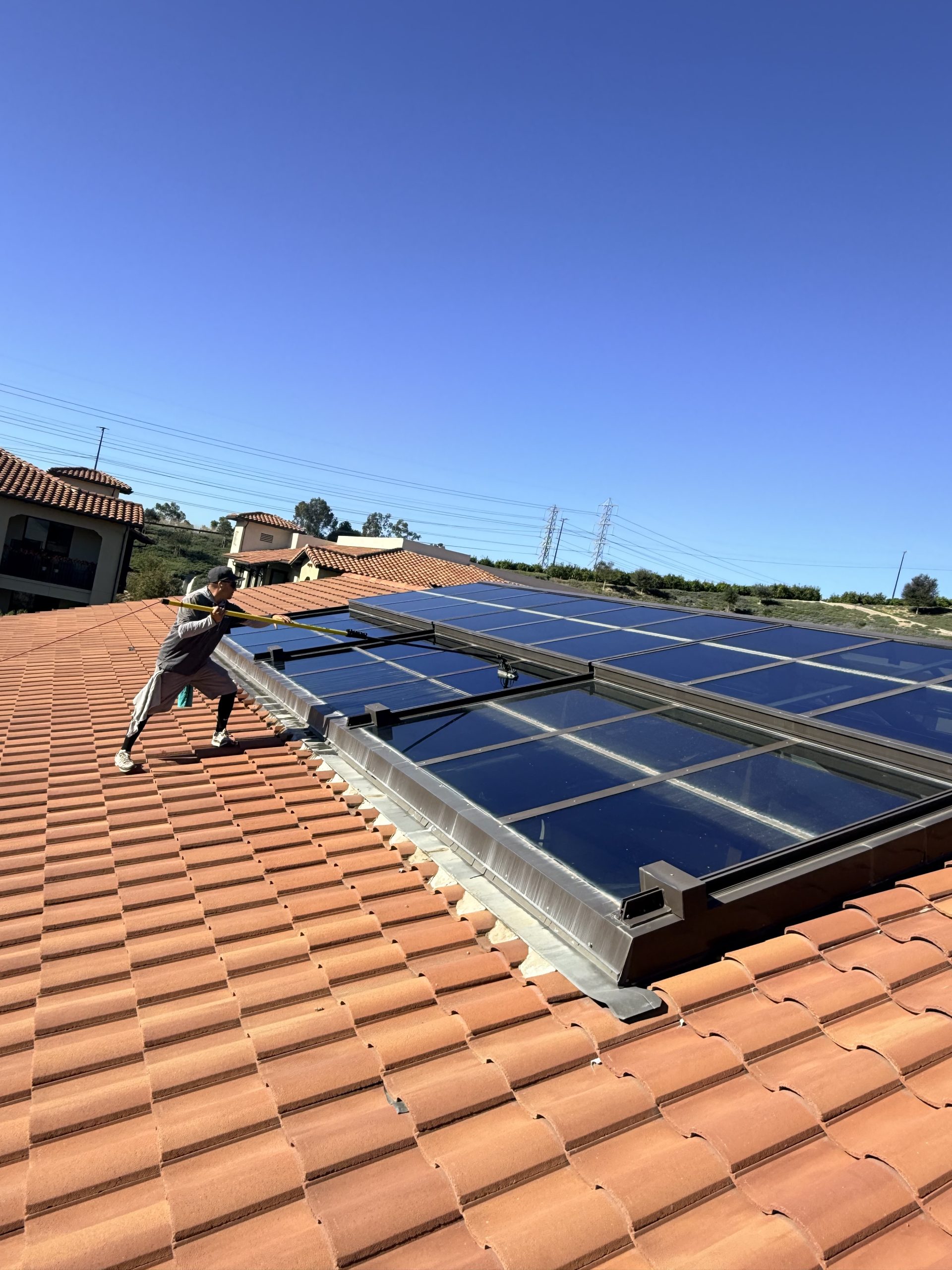
Should Solar Panels Be Cleaned After Construction Projects?
Construction projects can leave behind substantial amounts of dust, debris, and airborne contaminants that settle on nearby surfaces, including rooftop solar panels. Whether a property has undergone roof replacement, exterior painting, remodeling, landscaping, or new construction, these activities can affect the cleanliness of a solar energy system.
At Stanley Window Care, we provide professional solar panel cleaning services throughout Orange County, California, helping homeowners and businesses maintain clean solar panels after construction projects and routine environmental exposure. With nearly three decades of exterior cleaning experience, we understand the importance of using appropriate cleaning methods to remove construction dust without damaging sensitive solar equipment.
Featured Answer: Should Solar Panels Be Cleaned After Construction?
Yes, solar panels should be inspected after nearby construction projects and professionally cleaned when dust, paint overspray, cement particles, or other debris have accumulated on their surfaces. Construction-related contaminants can block sunlight, reduce solar energy production, and potentially cause surface damage if removed improperly. Professional solar panel cleaning helps restore the cleanliness of the glass, supports efficient sunlight absorption, and reduces the risk of damage from abrasive debris.
For properties undergoing roofing work, renovations, exterior painting, or nearby development, we recommend inspecting solar panels once construction activities are complete and scheduling cleaning when visible buildup is present.
Why Construction Projects Leave Solar Panels Covered in Dust and Debris
Solar panels are installed in exposed locations where they receive direct sunlight throughout the day. Unfortunately, these same locations make them vulnerable to airborne construction materials.
Construction activities generate particles that can travel beyond the immediate work area and settle on rooftops, solar arrays, windows, and surrounding exterior surfaces.
Even when contractors take precautions to control dust, lightweight particles can become airborne and accumulate on solar panels.
Roofing Projects and Shingle Debris
Roof replacements and repairs can generate substantial amounts of dust and debris.
Common roofing contaminants include:
- Asphalt shingle granules and roofing dust
- Sawdust from wood repairs
- Dirt disturbed during material removal
- Small particles from underlayment and roofing materials
- Debris from drilling and cutting
- Residue from roofing adhesives and sealants
These materials can accumulate along solar panel edges, beneath mounting hardware, and across the glass surface.
Roofing debris should never be aggressively scrubbed from solar panels, as abrasive particles can scratch protective glass or damage surface coatings.
We recommend removing loose debris using cleaning techniques approved by the solar panel manufacturer.
Exterior Painting and Stucco Work
Exterior painting, stucco repairs, and home renovations can release fine particles into the surrounding air.
Paint overspray is particularly concerning because droplets may adhere to solar panel glass.
Once paint dries, it may become difficult to remove without specialized treatment.
Stucco particles can also contain abrasive mineral materials that require careful handling.
At Stanley Window Care, we assess the type of contamination before selecting an appropriate cleaning method. Hardened paint, cement, and other bonded materials should not be scraped or treated with harsh chemicals without manufacturer approval.
Concrete Cutting and Masonry Construction
Concrete cutting, grinding, and masonry work can generate extremely fine dust.
This dust may contain silica and other mineral particles that settle on nearby solar panels.
When mixed with moisture, construction dust can form a stubborn residue that is more difficult to remove than ordinary household dirt.
We recommend professional cleaning when significant concrete or masonry dust has accumulated on solar panel surfaces.
Nearby Residential and Commercial Development
Construction does not need to occur directly on your property to affect your solar panels.
Nearby housing developments, road improvements, commercial building projects, and land grading can generate airborne dust that travels into surrounding neighborhoods.
This is particularly relevant for homeowners in developing areas of Irvine and other Orange County communities.
Even relatively new solar installations can accumulate construction dust shortly after installation.
How Construction Dust Affects Solar Panel Efficiency
Solar panels generate electricity by converting sunlight into electrical energy through photovoltaic cells.
For the system to operate effectively, sunlight must pass through the protective glass and reach the solar cells beneath it.
When construction dust covers the panel surface, it can reduce the amount of sunlight reaching those cells.
Reduced Sunlight Absorption
Dust and debris create a physical barrier between sunlight and the photovoltaic cells.
A light layer of dust may have a relatively small effect, while heavy accumulation can cause more noticeable energy losses.
The actual reduction depends on several factors, including the amount of contamination, panel angle, weather conditions, and solar system design.
Uneven Soiling and Partial Shading
Construction debris does not always accumulate evenly.
Dust may collect along lower panel edges, while larger debris can create localized shaded areas.
Depending on the solar panel design and electrical configuration, uneven shading can affect energy production disproportionately.
Removing accumulated material helps reduce unnecessary obstruction of sunlight.
Reduced Solar Energy Production
When solar panels receive less usable sunlight, electricity production may decline.
For homeowners who rely on rooftop solar to offset household electricity consumption, persistent soiling can reduce the financial benefit of their systems.
However, not every production decline is caused by dirty panels. Weather, seasonal sunlight changes, equipment faults, and shading can also affect output.
We recommend reviewing solar monitoring data alongside a visual inspection when determining whether cleaning is necessary.
What Types of Construction Residue Can Damage Solar Panels?
Not all construction contaminants present the same level of risk.
Some materials can be removed through routine professional cleaning, while others may require specialized evaluation.
| Construction contaminant | Potential concern | Recommended approach |
|---|---|---|
| Fine construction dust | Reduced sunlight transmission | Manufacturer-approved gentle cleaning |
| Roofing granules | Possible abrasion | Careful debris removal |
| Paint overspray | Bonded surface residue | Specialized assessment |
| Cement and stucco dust | Abrasive or alkaline deposits | Prompt evaluation and suitable cleaning |
| Sawdust | Surface buildup and trapped debris | Gentle removal |
| Adhesive residue | Difficult-to-remove deposits | Manufacturer-approved treatment |
| Metal particles | Possible scratching or corrosion-related concerns | Professional inspection and careful removal |
Prompt attention to construction residue is especially important when materials contain abrasive particles or substances that can bond to glass.
At Stanley Window Care, we emphasize protecting the solar panel surface rather than using aggressive cleaning methods that may cause additional damage.
When Should Solar Panels Be Cleaned After Construction?
The ideal cleaning time depends on the type of construction activity, the amount of debris produced, and whether additional work is scheduled.
After Roof Replacement or Roof Repairs
Roofing work can generate substantial dust and debris.
We generally recommend inspecting solar panels once the roofing contractor has completed the project and the surrounding work area has been cleared.
If the panels were removed and reinstalled during the project, the solar installer should confirm that the equipment and electrical connections are properly secured before cleaning.
After Exterior Painting
Solar panels should be inspected after exterior painting, particularly when spray equipment was used.
If paint overspray is visible, professional assessment is recommended before attempting removal.
Cleaning ordinary dust is different from removing dried paint, and inappropriate methods can damage the glass.
After Home Remodeling or Additions
Home additions, demolition, cutting, drilling, and exterior remodeling can produce significant airborne debris.
We recommend evaluating rooftop solar panels after the project has been completed, especially if work occurred near the solar array.
After Nearby Construction Projects
For homeowners living near active developments, cleaning may be beneficial after major dust-producing activities have ended.
If construction continues for several months, periodic inspection can help determine whether an interim cleaning is worthwhile.
The goal is to avoid allowing excessive buildup to remain while also preventing unnecessary repeat cleaning during ongoing construction.
Why Professional Solar Panel Cleaning Is Better Than DIY Cleaning After Construction
Cleaning rooftop solar panels can be more complicated than washing ordinary exterior glass.
Solar equipment is installed at elevated locations, often on sloped roofing surfaces, and may be surrounded by electrical wiring, mounting hardware, and other sensitive components.
Improper cleaning can create safety hazards or damage the system.
Avoiding Scratches From Abrasive Debris
Construction dust may contain sand, concrete particles, roofing granules, and other abrasive materials.
Scrubbing these particles directly against solar panel glass can cause scratches.
Professional cleaning should begin with an assessment of the debris and use methods that minimize abrasion.
Preventing Damage From Harsh Chemicals
Household cleaners, acidic products, abrasive compounds, and strong degreasers may be unsuitable for solar panels.
Some chemicals can affect coatings, seals, frames, or other components.
We recommend following the solar panel manufacturer’s cleaning instructions and avoiding products that have not been approved for the equipment.
Reducing Rooftop Safety Risks
Solar panels are frequently positioned on steep or elevated roofs.
Attempting to clean them without proper access equipment and fall protection can lead to serious injuries.
Professional service helps homeowners avoid unnecessary rooftop exposure.
Protecting Electrical Components
Solar panels are electrical devices that can generate electricity whenever exposed to sunlight.
Water should never be directed into damaged electrical connectors, junction boxes, or compromised wiring.
If construction activities have damaged solar equipment, a qualified solar technician should inspect the system before cleaning proceeds.
Our Professional Solar Panel Cleaning Approach
At Stanley Window Care, we understand that solar panels require careful handling, particularly after construction projects.
Our approach focuses on evaluating the condition of the panels and selecting appropriate cleaning methods.
1. Evaluating Surface Conditions
We begin by considering the type and amount of contamination.
Ordinary dust, roofing debris, and paint overspray require different treatment considerations.
We also look for visible concerns that may affect safe cleaning, such as cracked glass, loose components, or damaged surrounding materials.
2. Selecting Suitable Cleaning Equipment
We use cleaning methods appropriate for the surface and its condition.
Depending on the panel manufacturer’s requirements, suitable methods may include purified or low-mineral water and nonabrasive cleaning equipment.
The objective is to remove contamination without unnecessarily exposing the glass to harsh chemicals or excessive mechanical pressure.
3. Removing Construction Dust Carefully
Loose debris must be handled cautiously to avoid dragging abrasive particles across the glass.
We prioritize gentle cleaning techniques and avoid unnecessary scraping.
4. Addressing Stubborn Residue
If construction materials have bonded to the surface, additional evaluation may be necessary.
Not every type of residue can be safely removed through routine solar panel cleaning.
When a contaminant requires specialized treatment, we recommend confirming compatibility with the manufacturer’s guidance before proceeding.
5. Reviewing the Finished Surface
After cleaning, we assess accessible surfaces for remaining visible contamination.
Our focus is on restoring the cleanliness of the panels while respecting the limitations of the equipment and cleaning process.
Can Rain Remove Construction Dust From Solar Panels?
Rain can remove some loose dirt and dust from solar panel surfaces, but it may not eliminate all construction-related contamination.
The effectiveness of rainfall depends on the amount of precipitation, panel angle, dust composition, and how strongly particles adhere to the glass.
Light Rain May Not Remove Heavy Dust
Light rainfall can mix with accumulated dust and leave behind visible residue as the water evaporates.
This is particularly noticeable when fine construction particles form a muddy film.
Rain Cannot Reliably Remove Bonded Construction Materials
Paint overspray, adhesive residue, cement deposits, and other bonded contaminants generally require more than ordinary rainfall.
These materials may remain attached to the glass even after repeated rainstorms.
Dry Conditions Can Allow Dust to Accumulate
Southern California experiences extended periods with limited rainfall.
During these conditions, construction dust may remain on solar panels for weeks or months unless removed through cleaning.
For Orange County homeowners, professional cleaning may be beneficial when construction has caused substantial surface buildup.
Solar Panel Cleaning After Construction in Irvine, California
Irvine contains established neighborhoods as well as communities that have experienced significant residential and commercial development.
Construction activity can create localized dust conditions that affect nearby properties.
At Stanley Window Care, we provide solar panel cleaning services for homeowners throughout Irvine, including communities such as Great Park, Woodbridge, Northwood, Portola Springs, Turtle Rock, and surrounding residential areas.
Great Park Solar Panel Cleaning
Newer homes in Great Park may have rooftop solar systems located near ongoing development, landscaping projects, or neighboring construction.
Construction dust can settle on solar panels even when the homeowner’s property is already completed.
We recommend inspecting solar panels after nearby grading, roofing, or building activity that produces substantial airborne debris.
Solar Panel Cleaning in Portola Springs
Homes in Portola Springs may experience dust from landscaping, nearby roadways, and construction activity.
Regular inspection can help homeowners determine when professional cleaning is necessary.
Solar Panel Cleaning in Woodbridge and Northwood
Established Irvine neighborhoods can also experience construction-related contamination from roof replacements, remodeling, exterior painting, and neighboring renovations.
Older and newer solar installations alike may benefit from cleaning after significant dust-producing work.
Solar Panel Cleaning After Roofing Projects in Orange County
Roofing projects deserve special attention because the work often takes place directly around solar panel installations.
When roofers remove old materials or install new roofing components, debris may accumulate on exposed solar panels.
Some projects also require temporary removal and reinstallation of solar equipment.
Before Roofing Work Begins
Homeowners should coordinate with their roofing contractor and solar installer to determine whether panels need to be removed or protected.
Any protective covering should be approved for the equipment and installed by qualified personnel.
During Roofing Work
Construction crews should take precautions to minimize unnecessary debris accumulation.
Solar panels should not be used as work surfaces, and tools or materials should not be placed directly on the glass.
After Roofing Work Is Complete
Once roofing activities have ended, we recommend inspecting the panels for dust, granules, adhesive residue, and visible damage.
If cleaning is necessary, it should be performed only after the system is safe to access and the relevant installation work has been completed.
How Often Should Solar Panels Be Cleaned in Orange County?
Solar panel cleaning frequency varies based on local conditions and the manufacturer’s recommendations.
Some properties experience minimal soiling and may not require frequent cleaning.
Others are exposed to construction dust, heavy landscaping debris, bird droppings, or repeated airborne contamination.
| Property condition | Suggested approach |
|---|---|
| Minimal dust and no visible buildup | Inspect periodically and monitor production |
| Completed roofing project | Inspect and clean if contaminated |
| Recent exterior painting | Inspect promptly for overspray |
| Nearby active construction | Monitor buildup during the project |
| Heavy construction dust accumulation | Arrange professional assessment and cleaning |
| Persistent bird droppings or localized debris | Address when safe and appropriate |
| Regular environmental dust | Clean based on observed conditions and system performance |
Rather than relying on a rigid schedule, we recommend combining visual inspection with solar production monitoring.
This helps homeowners make informed decisions about when cleaning is worthwhile.
Does Cleaning Solar Panels Improve Energy Production?
Cleaning can improve energy production when accumulated dirt or debris is significantly blocking sunlight.
However, the amount of improvement varies.
A lightly soiled system may show little measurable change, while panels covered in heavy construction dust may experience a more noticeable benefit.
The result depends on the extent of contamination, solar irradiance, panel orientation, and system characteristics.
Professional solar panel cleaning should be viewed as a maintenance service that removes avoidable surface contamination, not as a guarantee of a specific increase in electricity production.
For homeowners with monitoring systems, comparing energy output under similar weather and sunlight conditions before and after cleaning can provide useful information.
Signs Your Solar Panels Need Cleaning After Construction
Construction-related contamination may not always be obvious from ground level.
However, several conditions can indicate that cleaning should be considered.
- Visible dust or cloudy buildup across the glass
- Roofing granules or debris collecting near panel edges
- Paint overspray or cement residue
- Bird droppings mixed with construction dust
- Dirt accumulation following nearby grading or demolition
- Unexplained production declines accompanied by visible soiling
- Residue remaining after rainfall
If panels appear cracked, electrically damaged, or structurally compromised, homeowners should contact a qualified solar professional before arranging cleaning.
Frequently Asked Questions About Solar Panel Cleaning After Construction
Should solar panels be cleaned after a roof replacement?
Yes, solar panels should be inspected after roof replacement. Roofing dust, granules, and debris can accumulate on the glass and may interfere with sunlight transmission. Cleaning is recommended when significant contamination is present and the equipment is safe to access.
Can construction dust damage solar panels?
Construction dust can contain abrasive particles that may scratch solar panel glass if cleaned improperly. Certain construction materials may also leave difficult-to-remove deposits. Using suitable cleaning methods helps minimize unnecessary damage.
How soon after construction should solar panels be cleaned?
We generally recommend inspecting the panels once construction has finished and cleaning them when visible dust or residue remains. If construction is ongoing and buildup is substantial, an interim cleaning may be appropriate.
Can I pressure wash solar panels after construction?
High-pressure washing is generally not recommended unless explicitly permitted by the solar panel manufacturer. Excessive pressure can damage seals, components, or other parts of the installation. We recommend manufacturer-approved, low-impact cleaning methods.
Will rain clean construction dust off solar panels?
Rain may remove some loose dust, but it may not eliminate heavy buildup, cement residue, paint overspray, or other bonded contaminants. Professional cleaning may be necessary when significant deposits remain.
Can paint overspray be removed from solar panels?
Some paint deposits may be removable, but the appropriate method depends on the paint type, glass surface, and manufacturer’s requirements. Scraping or using strong solvents without approval can cause permanent damage.
Is solar panel cleaning necessary after exterior stucco work?
Solar panels should be inspected after stucco application or repair because cement-based dust and particles may settle on the glass. If significant residue is present, careful professional cleaning or specialized assessment is recommended.
How much does solar panel cleaning cost in Orange County?
Pricing depends on the number of panels, roof accessibility, contamination severity, and cleaning requirements. Stanley Window Care has a minimum service charge of $220. We recommend requesting a property-specific estimate to determine the cost of the required work.
Can dirty solar panels increase my electricity bill?
Heavy dirt accumulation can reduce solar energy production, potentially increasing the amount of electricity purchased from the utility. The financial effect depends on the solar system’s output, electricity usage, and utility billing arrangement.
Does professional cleaning void a solar panel warranty?
Cleaning performed according to the manufacturer’s instructions should generally be compatible with maintenance requirements. However, warranty terms vary, and damage caused by prohibited cleaning methods may not be covered. Homeowners should review their specific warranty documentation.
Why Choose Stanley Window Care for Solar Panel Cleaning?
At Stanley Window Care, we have provided professional exterior cleaning services throughout Orange County since 1997.
As a family-owned and operated company, we place strong emphasis on careful workmanship, dependable service, and maintaining long-term relationships with homeowners.
Our services include professional window cleaning, solar panel cleaning, pressure washing, soft washing, and other exterior cleaning solutions.
We understand that construction projects can leave multiple exterior surfaces covered in dust and debris.
For homeowners completing renovations, roofing work, or other property improvements, we can help address cleaning needs as part of their post-construction maintenance.
Our experience serving Irvine, Newport Beach, Laguna Beach, Laguna Niguel, Mission Viejo, Dana Point, San Clemente, and surrounding South Orange County communities allows us to work with a wide variety of residential property styles and exterior surfaces.
We focus on using appropriate methods for the materials being cleaned and protecting surrounding property throughout the service.
Schedule Professional Solar Panel Cleaning After Construction in Orange County
Construction projects can improve the appearance, functionality, and value of a property, but the dust and debris they leave behind can affect rooftop solar panels.
Whether you recently replaced your roof, completed exterior painting, remodeled your home, or live near an active construction project, professional solar panel cleaning can help remove accumulated contaminants and maintain clear glass surfaces for sunlight absorption.
At Stanley Window Care, we provide professional solar panel cleaning services for residential properties throughout Irvine and South Orange County.
We help homeowners address construction dust, environmental buildup, and other surface contaminants using careful cleaning methods appropriate for their solar equipment.
Contact Stanley Window Care today at 949-786-0816 to request an estimate for solar panel cleaning after construction.
Visit stanleywindowcare.com to learn more about our professional exterior cleaning services.
Stanley Window Care — Family-Owned and Operated Since 1997.

